
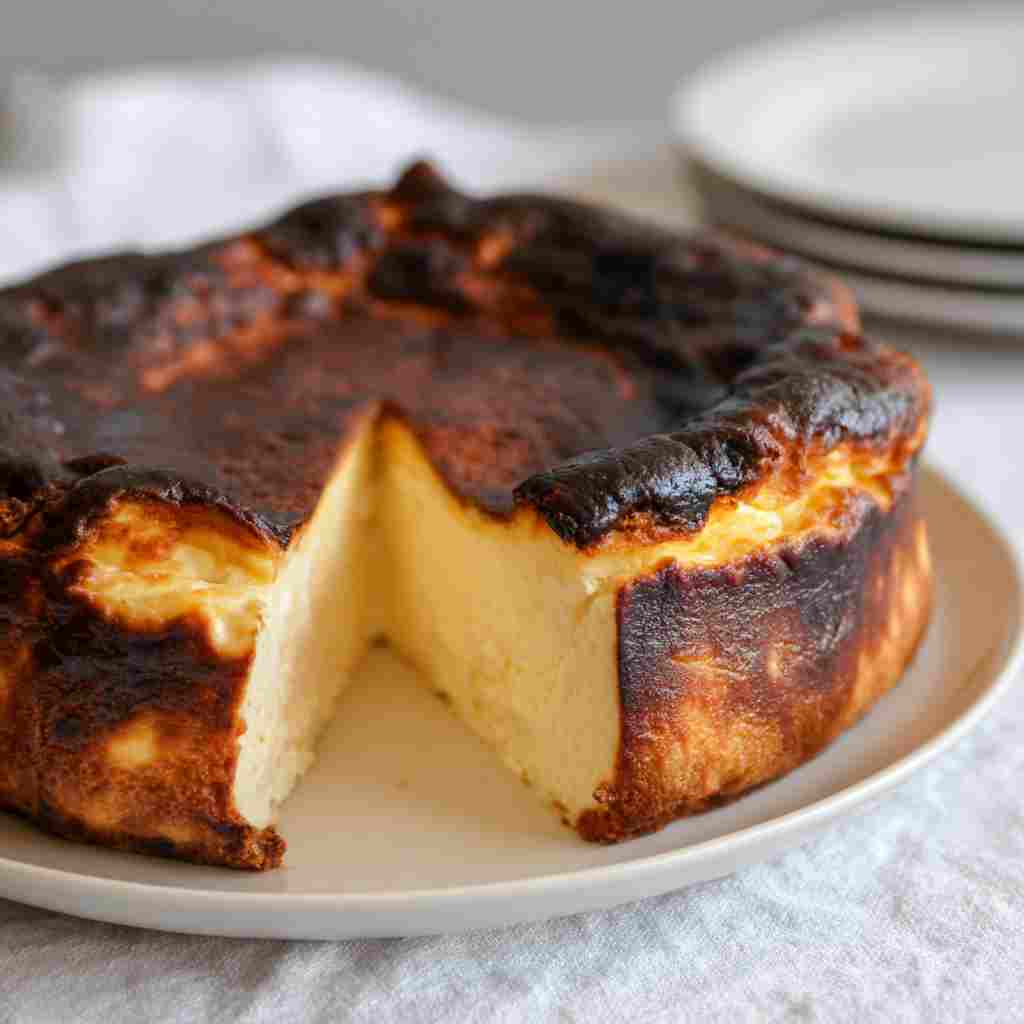
The Burnt Basque Cheesecake is a global sensation that originated in the heart of San Sebastián, Spain. This authentic recipe recreates the iconic dessert from the famous La Viña bar, offering a creamy, caramelized treat that is surprisingly simple to make at home.
Table of Contents
Why You Will Love This Recipe
This Burnt Basque Cheesecake is the ultimate “un-cheesecake” because it defies all the traditional rules of baking. You will love it because there is no crust to press down, no water bath required, and you actually want the top to look scorched and dark. The high-heat baking method creates a beautiful, bittersweet exterior that perfectly balances the rich, custard-like center. Whether you are a beginner baker or a seasoned pro, the rustic appearance and decadent flavor make this a foolproof showstopper for any occasion.
Ingredients
- 2.2 lbs (1 kg) Philadelphia cream cheese (room temperature)
- 7 large eggs
- 2 cups (400g) granulated sugar
- 1 tablespoon all-purpose flour
- 6.5 fl oz (200ml) heavy cream
Step-by-Step Instructions
- Preheat your oven to 410°F (210°C) and ensure the rack is in the center position.
- Line a 10-inch (25 cm) springform pan with two large sheets of parchment paper, ensuring the paper extends at least 2 inches above the rim of the pan to account for the cake rising.
- In a large mixing bowl, combine the room-temperature cream cheese and sugar using an electric mixer or a metal spoon until the mixture is completely smooth.
- Add the eggs one at a time, mixing well after each addition to ensure they are fully incorporated without overbeating the batter.
- Sift in the tablespoon of flour and pour in the heavy cream, then whisk gently until the batter is homogenous and creamy.
- Pour the cheesecake batter into the prepared springform pan and tap it gently on the counter to release any large air bubbles.
- Bake for 35 to 50 minutes depending on your desired texture; 35 minutes results in a very runny center, while 50 minutes creates a fully set cake.
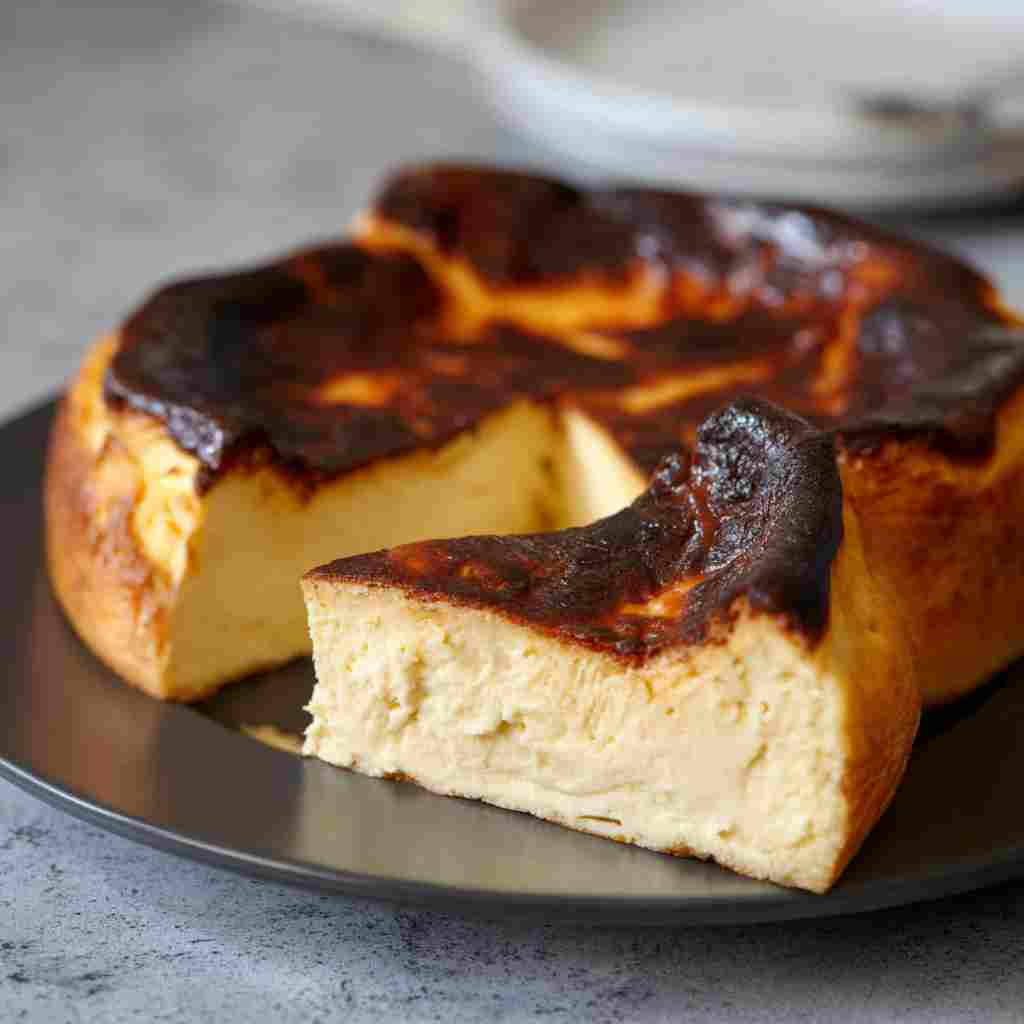
- Remove the cake from the oven when the top is dark brown (almost burnt) and the center still has a significant “jiggle” like gelatin.
- Allow the cheesecake to cool completely in the pan on a wire rack before transferring it to the refrigerator for at least several hours, though overnight is best.
- Carefully unclip the springform pan and peel back the parchment paper before slicing and serving.
Expert Tips / Pro Tips
To achieve the perfect Burnt Basque Cheesecake, always use room-temperature ingredients, especially the cream cheese, to avoid lumps in your batter. If your oven doesn’t seem to brown the top enough by the 40-minute mark, you can briefly turn on the broiler for the last minute, but watch it very closely as it can go from caramelized to truly burnt in seconds. Do not be alarmed when the cake falls after cooling; this deflation is a signature characteristic of the La Viña style. For the cleanest slices, use a sharp knife dipped in hot water and wiped dry between every single cut.
While the original La Viña recipe calls for Philadelphia cream cheese, you can experiment by substituting a portion of it with Mascarpone for an even richer, silkier mouthfeel. If you need a gluten-free version, you can simply omit the tablespoon of flour or replace it with cornstarch; the cake will still set beautifully due to the high egg content. For those who prefer a less sweet dessert, you can reduce the sugar to 1.5 cups (300g) without compromising the structural integrity of the cheesecake.
Serving Suggestions
The most traditional way to enjoy this dessert is exactly how they serve it in San Sebastián: with a small glass of Pedro Ximenez sherry. The dark, raisin-like sweetness of the wine complements the caramelized “burnt” top of the cake perfectly. If you prefer a more modern presentation, serve a slice with a handful of fresh tart berries or a dollop of lightly sweetened whipped cream. It is best enjoyed at room temperature or slightly chilled to appreciate the full spectrum of its creamy texture.
This cheesecake stores exceptionally well in the refrigerator. Keep it wrapped tightly in plastic wrap or stored in an airtight container for up to 5 days. While it is best enjoyed fresh, you can freeze the Burnt Basque Cheesecake by wrapping individual slices tightly in plastic wrap and then foil; it will stay good for up to 2 months. To serve from frozen, thaw the slice in the refrigerator overnight. Reheating is not recommended, as the delicate custard texture is best maintained when kept cool or at room temperature.
Nutrition Information
| Nutrient | Amount Per Serving (1 Slice) |
|---|---|
| Calories | 485 kcal |
| Total Fat | 38g |
| Saturated Fat | 22g |
| Cholesterol | 245mg |
| Sodium | 310mg |
| Total Carbohydrates | 28g |
| Sugars | 25g |
| Protein | 9g |
Burnt Basque Cheesecake
Ingredients
Equipment
Method
- Preheat your oven to 410°F (210°C) and ensure the rack is in the center position.
- Line a 10-inch (25 cm) springform pan with two large sheets of parchment paper, ensuring the paper extends at least 2 inches above the rim of the pan to account for the cake rising.
- In a large mixing bowl, combine the room-temperature cream cheese and sugar using an electric mixer or a metal spoon until the mixture is completely smooth.2.2 lbs Philadelphia cream cheese, 2 cups granulated sugar
- Add the eggs one at a time, mixing well after each addition to ensure they are fully incorporated without overbeating the batter.7 large eggs
- Sift in the tablespoon of flour and pour in the heavy cream, then whisk gently until the batter is homogenous and creamy.1 tbsp all-purpose flour, 6.5 fl oz heavy cream
- Pour the cheesecake batter into the prepared springform pan and tap it gently on the counter to release any large air bubbles.
- Bake for 35 to 50 minutes depending on your desired texture; 35 minutes results in a very runny center, while 50 minutes creates a fully set cake.
- Remove the cake from the oven when the top is dark brown (almost burnt) and the center still has a significant “jiggle” like gelatin.
- Allow the cheesecake to cool completely in the pan on a wire rack before transferring it to the refrigerator for at least several hours, though overnight is best.
- Carefully unclip the springform pan and peel back the parchment paper before slicing and serving.
Notes
FAQ
Why is my Basque cheesecake not burnt on top?
If your cheesecake is cooked through but not dark enough, your oven temperature might be too low. You can move the cake to a higher rack or use the broiler for 1-2 minutes at the end of the baking process to achieve that signature scorched look.
Can I use a different size pan?
Yes, you can use a smaller 8-inch or 9-inch pan for a taller cheesecake. However, you will need to increase the baking time slightly to ensure the center reaches the correct consistency without being completely liquid.
Is the center supposed to be runny?
The texture is a matter of personal preference. In San Sebastián, many versions are served with a “molten” center that slowly oozes. If you prefer this, bake for only 35 minutes. For a traditional creamy cheesecake texture, aim for 40-45 minutes.
Does it really need to sit overnight?
While you can eat it once it has cooled to room temperature, the flavors develop and the texture becomes much more velvety after a night in the refrigerator. It is highly recommended to wait if you want the authentic experience.